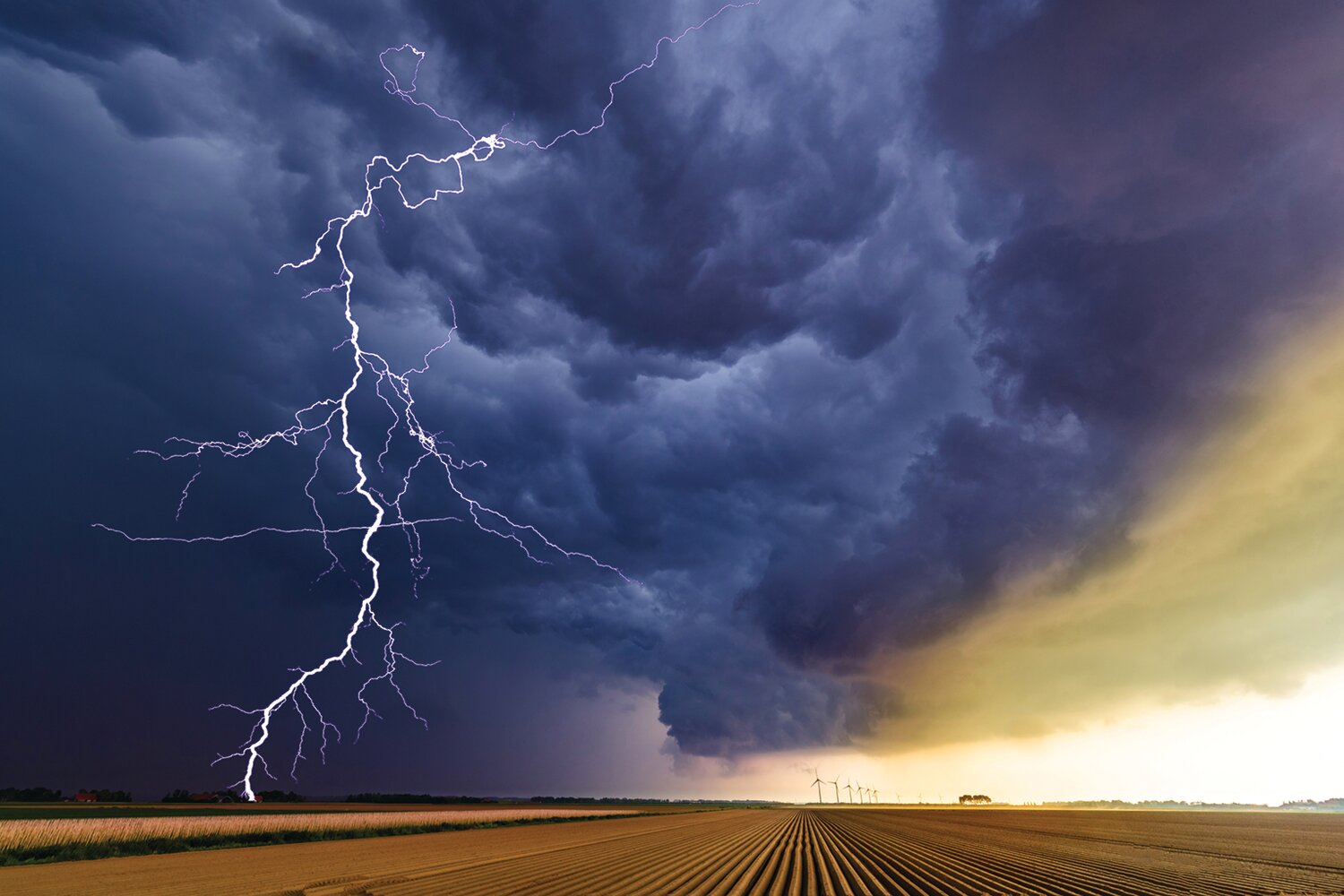
The National Weather Service (NWS) is celebrating its 25th annual National Lightning Safety Awareness Week June 21 through June 27, 2026. Lightning is an underestimated killer. People think of trees being dangerous because they’re tall but many deaths and injuries occur frequently in open fields, including ballparks and playgrounds, because then people are the tall objects.
Use the 30-30 rule, when visibility is good and there isn’t anything obstructing your view of the thunderstorm. When you see lightning, count the time until you hear thunder. If that time is 30 seconds or less, the thunderstorm is within six miles of you and is dangerously close. Seek shelter immediately. The threat of lightning continues for a much longer period than most people realize. Wait at least 30 minutes after the last clap of thunder before leaving shelter. Don't be fooled by sunshine or blue sky!
Lightning Facts
• The odds of becoming a lightning victim in the U.S. in any one year is 1 in 1,735,000. The odds of being struck in your lifetime are roughly 1 in 21,700.
• Lightning can kill people (492 deaths were recorded in the U.S. between 2006 and 2024) or cause cardiac arrest. Injuries range from severe burns and permanent brain damage to memory loss and personality change. About 10 percent of lightning-strike victims are killed, but 70 percent of survivors suffer serious long-term effects. About 400 people survive lightning strokes in the U.S. each year.
• Ice in a cloud may be key in the development of lightning. Ice particles collide as they swirl around in a storm, causing a separation of electrical charges. Positively charged ice crystals rise to the top of the thunderstorm, and negatively charged ice particles and hailstones drop to the lower parts of the storm. Enormous charge differences develop. A moving thunderstorm also gathers positively charged particles along the ground that travel with the storm. As the differences in charges continue to increase, positively charged particles rise up tall objects such as trees, houses, and telephone poles—and people.
• Most lightning deaths and injuries in the United States occur during the summer months, when the combination of lightning and outdoor activities reaches a peak. People involved in activities such as fishing, bicycling, golfing or working outdoors all need to take the appropriate actions quickly when thunderstorms approach.
• Victims of lightning do not retain the charge and are not "electrified" so it’s safe to help them.
• Even inside homes people must avoid activities that put their lives at risk from a possible lightning strike. As with the outdoor activities, these activities should be avoided before, during, and after storms. In particular, people should stay away from windows and doors and avoid contact with anything that conducts electricity.
For interesting survivor stories and lightning photos, go to www.weather.gov/safety/lightning