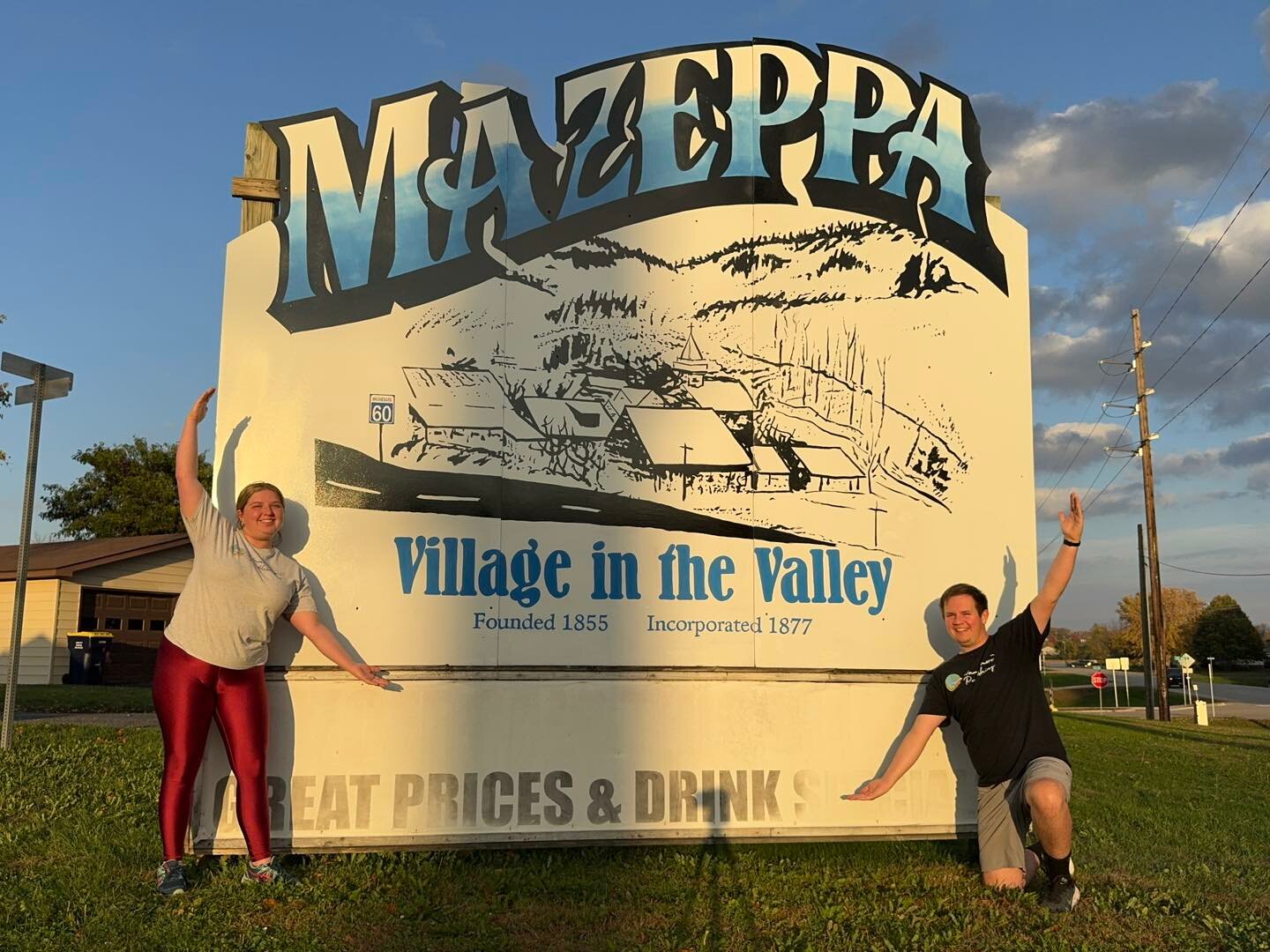
Mazeppa, MN
Joseph Fuller, Enoch Young, I. O. Seely, and C. C. Sleeper were the original four men to call the Mazeppa area home, having arrived in February 1855. Over that next year, John E. Hyde built a store, G. W. Judd became the local blacksmith, O. D. Ford erected a hotel, and a saw and grist mill were raised to harness the power of the Zumbro River. Ivan Mazeppa, a Cossack chief made famous by a Lord Byron poem, became the town's namesake when it came time to name the local post office, and later, the station on the Chicago, Milwaukee & St. Paul line. It was nicknamed the "Bug Line" because of its odd twists and curves as it followed the Zumbro eastward to Hammond and Millville. Over 600 barrels of flour were produced each day at the local mills at their peak, powered by the 26-foot-tall wooden dam and "Mill Pond" that served the community until February 2, 1891, when it was burned. A survey conducted five years later showed that Mazeppa at that time had an elevator, a lumber shed, a stockyard, a public park and bandstand, two churches, and a school, amongst numerous other businesses. A walking bridge for horse-and-buggy traffic over the river was built in 1904, offering spectacular views of the local mill and pond. While many of these original places are now gone, Mazeppa is still home to the historic 1904 Walnut Street Pratt truss bridge, and the 1917-1919 Lake Zumbro Hydroelectric Generating Plant on the northern end of Lake Zumbro. Trains stopped running to Mazeppa in 1952, but the new high school building was still completed in 1958. On December 26, 1975, a conflagration nearly destroyed the building (as it did the elementary school). Keith Ramthun and Joseph Liffrig heroically closed the fire doors between the two buildings, allowing the fire department to arrive and extinguish the blaze. Leonard "Stub" Allison, best known for coaching the 1937 national champion University of California football program, was born here in 1892.
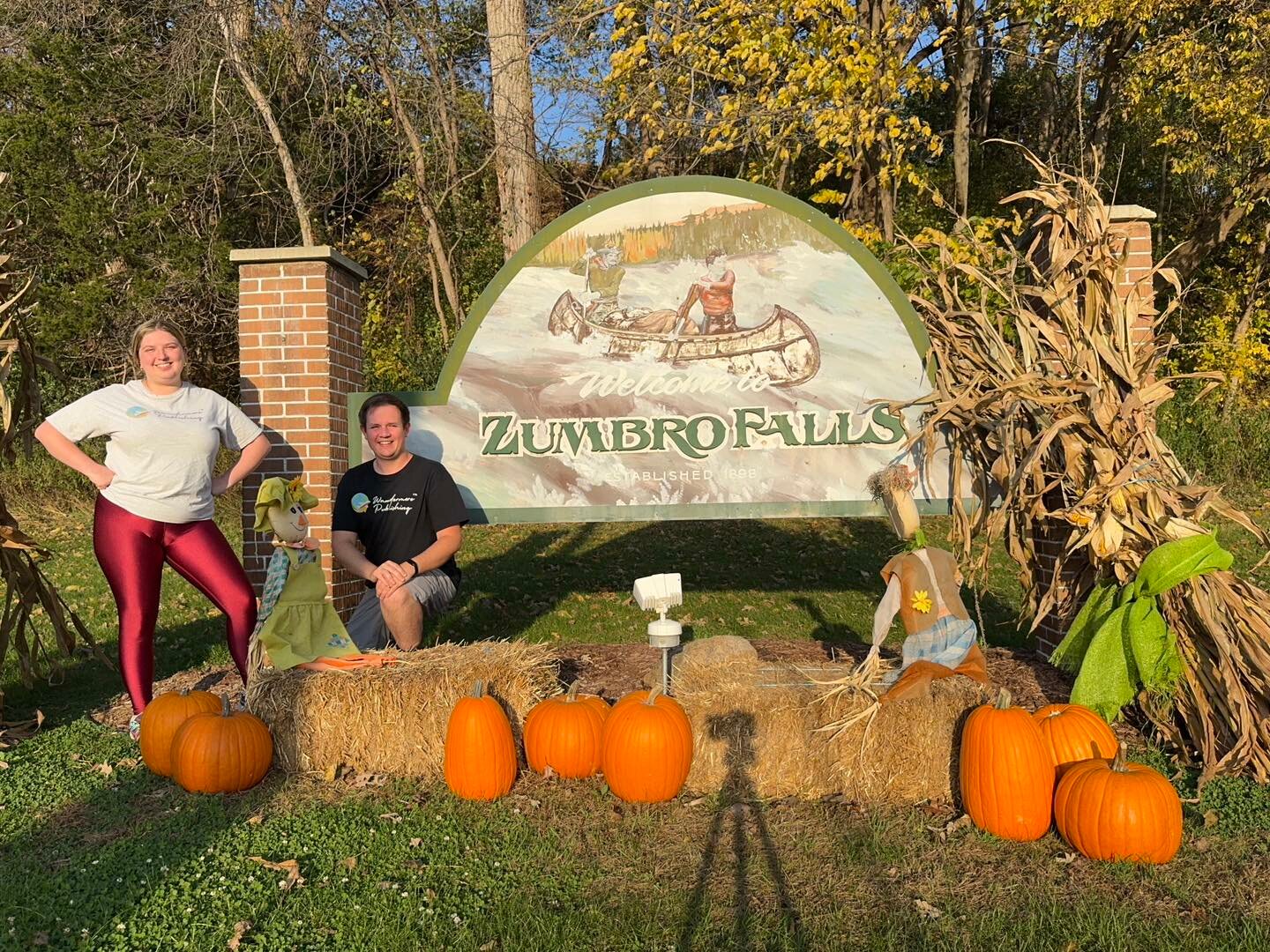
Zumbro Falls, MN
Population: 155
County: Wabasha
Repeated flooding has caused many problems for this community on the "Riviers des Embarrass," a.k.a. The River of Difficulties. In 1855, a small settlement began when the Tibbetts brothers built homes on either side of the river and operated a ferry between them. They sold it three years later. In 1866, Benjamin Clark built a gristmill and a dam, which formed a small waterfall known to locals as Zumbro Falls. From 1857 to 1858 and 1869 to 1872, a post office used that name intermittently, before deciding to use it for good beginning in 1873. Uriah S. Whaley platted the original townsite, and the Midland Railroad, ultimately part of the Chicago, Milwaukee & St. Paul Railroad system, came through in the late 1870s and helped spur the development of many businesses, churches, and schools. An 1896 plat shows that the original Zumbro Falls site (home to two churches) was located northwest of the present site. The "present" town of that time had a school, a depot, a hotel, a livery barn, and a stockyard. Zumbro Falls was incorporated by the county commissioners on February 28, 1898, after several townspeople petitioned for that designation. Local NRHP sites in the vicinity include the 1874 Bear Valley Grange Hall, the 1937 double-arch Zumbro Parkway Bridge, and the 1938 Works Progress Administration No. 5827 arch bridge. After the September 2010 flood that decimated many local communities, Zumbro Falls experienced a 25.1%% decrease in population from 207 residents to 155.
What is Wandermore in Minnesota?
Hey! If you’re reading this, congratulations! You’ve discovered one of my posts on the greatest Minnesota town documentation project in history. My name is Seth Varner, and I’m a 25-year-old travel and history author who’s on a mission to document all 856 of Minnesota’s incorporated communities throughout 2025. In 2020, I had the idea to visit every incorporated town in my home state of Nebraska. I have since traveled to every incorporated town in Nebraska, Iowa, Kansas, and both Dakotas (over 3,000 communities) in the last half-decade. My project aims to showcase as much as possible about Minnesota’s 856 communities (big or small), from their history and architecture to businesses, museums, food, parks, and more. Although I sadly won’t be able to capture a picture of every “thing” in every town, I’ll try my absolute best to photograph as many businesses, churches, schools, and other points of interest as I can to provide folks with a general sense of what the town looks like in 2025. I would greatly appreciate it if you, the people of Minnesota, could contribute to my posts by captioning the photos and sharing your memories or knowledge of the locations I have captured for the enjoyment of others. Please feel free to add your own pictures as well if certain places aren’t featured in the post!
Once I finish traveling the Land of 10,000 Lakes, I will compile a travel guide, “Wandermore in Minnesota.” It will be a travel guide, a history book, and a living photo album all under one cover, and the most comprehensive guide to Minnesota’s 856 incorporated towns ever created. If you enjoyed this post, please consider helping me continue to preserve history and promote small-town tourism by donating to the Wandermore travel fund. I freely share my photos/town write-ups on Facebook for your enjoyment, so any contribution to help offset the cost of food, hotels, gas, car repairs, etc., is greatly appreciated. I have enabled a donation portal after a few individuals expressed an interest in supporting my journey by contributing funds. For every $5.00 donated, I will place one person’s name (at the donor’s discretion) in the back of the Wandermore in Minnesota book upon its release ($10 = 2 names, $20 = 4 names, etc.). You can request to have your name printed, a friend or family member’s name (living or “In Memory of"), or even a business name. The names will be printed in every copy and edition of the book forever!